
Report Card by Chat GPT
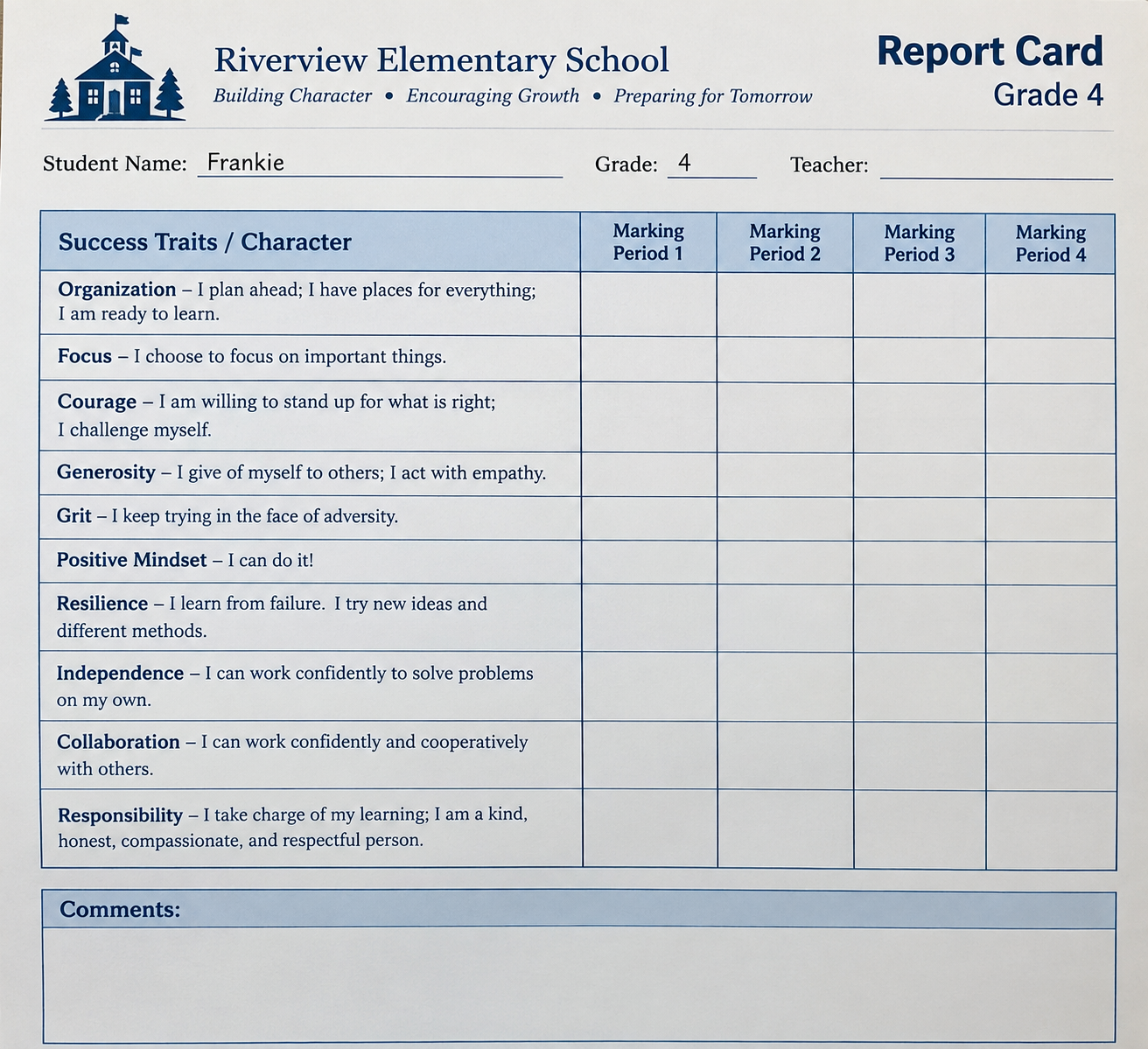
JOHN ZURN, Educational AuthorIt was the middle of October, and the annual report card anxiety had reached its usual level somewhere between “mild concern” and “my life is officially over.” This year, however, students had an extra surprise waiting for them. Along with their academic grades came a brand-new character report card. Back in August, the faculty had spent hours debating which qualities truly mattered in helping children become successful adults. We finally settled on ten Secrets of Success—Organization, Focus, Courage, Generosity, Grit, Positive Mindset, Resilience, Independence, Collaboration, and Responsibility. We weren’t suggesting algebra had suddenly become optional, but we were acknowledging an uncomfortable truth: employers, spouses, neighbors, and friends rarely ask to see your seventh-grade math grade. They care a great deal, however, about whether you’re dependable, resilient, and pleasant to be around before 8:00 a.m.
The first distribution of the two report cards produced reactions worthy of a reality television show. Ava, the school’s academic superstar, proudly opened another flawless report card filled with A’s. Then she looked at her character grades and discovered that while Responsibility earned an A, Positive Mindset and Generosity came in at respectable—but humbling—B’s. Across the room, Jake experienced the opposite emotional roller coaster. His academic grades were solid but unspectacular, yet his character report card was filled with A’s for Courage, Grit, and Collaboration. For perhaps the first time in his school career, Jake realized that quietly helping classmates, standing up for others, and refusing to quit actually counted for something. It was amazing how quickly students discovered that kindness, perseverance, and teamwork weren’t simply posters hanging in the hallway—they were expectations.
As the year unfolded, something remarkable happened. Students began paying as much attention to how they treated one another as they did to preparing for the next test. Ava made a conscious effort to become more generous and found that tutoring younger students was surprisingly rewarding. Jake gained confidence because the qualities that made him a terrific human being were finally receiving the recognition they deserved. Teachers noticed classrooms becoming more collaborative and less competitive, while conversations about resilience, responsibility, and courage became part of everyday life. By June, both students had grown—not just academically but personally. That’s the real value of grading character alongside intellect. Schools have spent over a century measuring what students know. Perhaps it’s time we give equal attention to who they are becoming. After all, the world already has plenty of brilliant people. It could always use a few more good ones.
We welcome you to the conversation. Please let us know that you care by liking comments, forwarding posts, or joining in our dialogue at johnzurn.com. We would love to hear your own “Stories From the Classroom….”.
From our first posting:
“As parents and teachers, we need to reclaim our traditional role as influencers of our children – not by shouting louder than the influencers our children discover online, but by stressing ideas that are more important than fancy shoes and snappy TikTok tunes. We need to emphasize traits that everyone agrees children will honor. We need to convince our children that the people who are most important to them have a better understanding of what it takes to be successful in life.”
#charactereducation #successtraits #parentingtips #homeschooling #teachertips